


 U.S. Department of Labor Blog
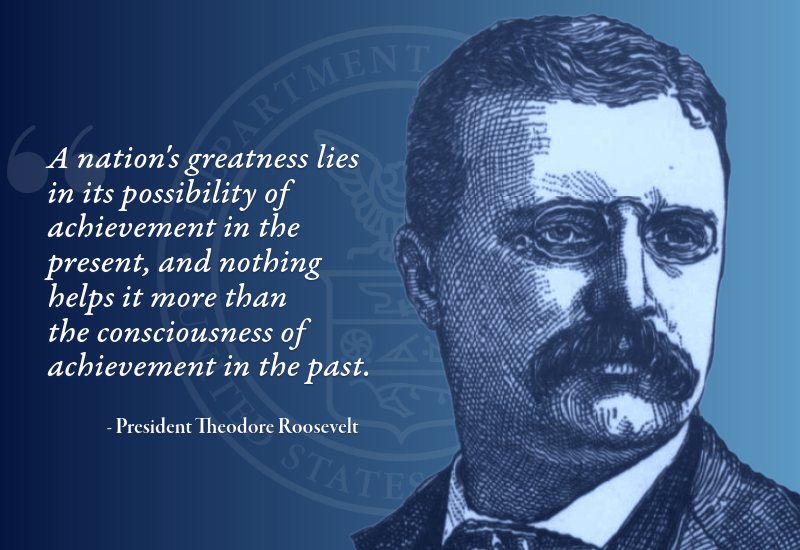
As we celebrate America’s 250th birthday, the U.S. Department of Labor is recognizing the figures who shaped our nation’s history. To this end, we recently inducted President Theodore Roosevelt into our Hall of Honor. It is a fitting tribute to a leader who championed the American Worker and skillfully navigated the challenges of a rapidly industrializing country.
Roosevelt was sworn in as vice president on March 4, 1901 — exactly 12 years before the U.S. Department of Labor was created. When President William McKinley was assassinated in September 1901, Roosevelt assumed the presidency and immediately put his ideals into action. Here are five things you may not know about his labor legacy:
1. Demanding a "Square Deal" for workers
Roosevelt’s "Square Deal" was rooted in the principle of equal opportunity. He believed that the role of government was to act impartially and ensure the economy was fair for business owners, workers, and consumers alike. Several key pieces of his legislative agenda advanced important labor reforms; for example, the Elkins Act of 1903 made it illegal for railroads to give secret rebates to large corporations— a practice that had harmed small businesses and agricultural communities. And the Federal Employers Liability Act of 1908 provided compensation to federal employees for injuries sustained on the job.
2. Mediating the 1902 coal strike
When the Anthracite Coal Strike of 1902 threatened to cripple the nation with a winter fuel shortage, Roosevelt became the first president to mediate a labor dispute. He brought both the mine owners and union leaders to the negotiating table to find a practical solution that would keep the economy moving. The strike ended with the miners receiving a 10% wage increase and a reduction in their workday from 10 to nine hours. By facilitating a compromise, Roosevelt averted a national crisis and established a model for resolving disputes through reason and negotiation.
3. "Trust-busting" to preserve competition
Roosevelt’s reputation as a trust-buster is sometimes misunderstood. His goal was not to dismantle big business, which he saw as a vital engine of economic progress, but to break up monopolies stifling the competition that underpins a healthy free market where innovation and efficiency can thrive. By enforcing the Sherman Antitrust Act against powerful trusts that engaged in unfair practices, he helped ensure that markets remained open for entrepreneurs and small businesses.
4. Promoting transparency with the Department of Commerce and Labor
In 1903, Roosevelt oversaw the creation of the Department of Commerce and Labor. This new Cabinet-level department was tasked with investigating corporate practices, industrial conditions, and labor-management disputes. Its functions helped shine a light on the complexities of the modern economy, prevent abuses, and foster a climate of trust between businesses and the American public without strangling economic growth.
5. Upholding individual liberty and collective bargaining rights
Theodore Roosevelt was a firm believer in individual liberty, and this principle guided his views on labor unions. He championed a worker's right to join a union, seeing it as a valid form of voluntary association. At the same time, he defended the "open shop" for government work, ensuring no American had to join a union to serve their country.
President Roosevelt understood that the success of the entire American enterprise depended on fairness and order, on policies that help both capital and labor thrive. We honor his legacy by putting American workers and industry first in all that we do. To learn more about him, visit the Theodore Roosevelt Association’s website or explore the Theodore Roosevelt President Library’s collection of archives.